Rheem Thermostat User Manual: A Comprehensive Guide
Welcome! This manual provides detailed instructions for Rheem thermostats, covering installation, operation, troubleshooting, and safety – ensuring optimal comfort and efficiency.
Rheem thermostats are designed to provide precise and efficient control of your home’s heating and cooling systems. These user-friendly devices offer a range of features, from basic temperature regulation to advanced programming capabilities, ensuring optimal comfort and energy savings. Rheem offers various models, including the RHC-TST213UNMS and the Comfort Control2 HD, each tailored to meet different needs and preferences.
Understanding your Rheem thermostat is crucial for maximizing its benefits. This guide will walk you through the initial setup, programming options, and troubleshooting steps. Proper installation and operation are key to ensuring reliable performance and extending the lifespan of your system. Remember to always prioritize safety when working with electrical components, and consult qualified service personnel for any repairs.
Understanding Rheem Thermostat Models
Rheem offers a diverse portfolio of thermostats to suit various home comfort needs. The RHC-TST213UNMS is a popular choice, known for its straightforward operation and compatibility with electric residential hybrid water heaters. For those seeking advanced features, the Comfort Control2 HD provides sophisticated programming options and serial communication capabilities for installers.
Different models cater to different heating systems, including dual element heaters which utilize two thermostats for precise temperature control. Understanding the specific features of your model is essential. Some thermostats include a Manual Reset Limit (ECO) function for safety, while others offer advanced scheduling and remote access. Refer to your specific model’s documentation for detailed information and compatibility guidelines.
Rheem RHC-TST213UNMS: Key Features
The Rheem RHC-TST213UNMS thermostat is designed for ease of use and reliable performance. Key features include a clear, user-friendly display and simple button controls for effortless temperature adjustments. It’s specifically engineered for compatibility with Rheem electric residential hybrid water heaters, ensuring optimal water heating efficiency.
This model allows for basic scheduling to create personalized comfort settings. It also provides options for temporary holds and overrides, giving you immediate control when needed. The thermostat’s design prioritizes safety, with features like a caution against attempting electrical repairs yourself – always defer to qualified service personnel; It’s a dependable choice for straightforward temperature regulation.

Thermostat Display and Buttons
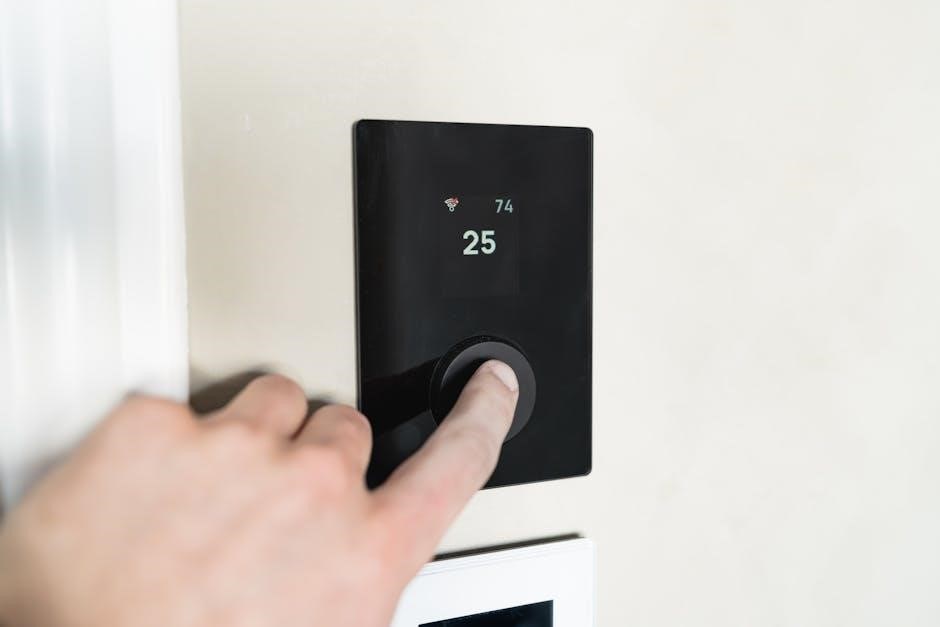
The Rheem thermostat display presents crucial information at a glance, including the current room temperature and the setpoint temperature. The display’s clarity ensures easy readability, even from a distance. Button functionality is intuitive; typically, up and down arrows adjust the temperature, while a ‘Mode’ button cycles through available settings like Heat, Cool, and Auto.
A ‘Hold’ or ‘Run’ button allows for temporary overrides of programmed schedules. The display may also indicate system status, such as whether the heating or cooling system is actively running. Familiarizing yourself with these basic elements will streamline operation. Refer to the quick start guide for a visual representation of button locations and their corresponding functions for optimal use.
Initial Setup and Installation
Before beginning installation, ensure the power to your heating and cooling system is completely switched off at the breaker panel. This is a critical safety precaution. The Rheem thermostat package should include the thermostat itself, a mounting plate, screws, and wire labels. Carefully unpack all components and verify everything is present.
Proper wiring is essential for correct operation. Use the provided wire labels to identify each wire connected to your old thermostat before disconnecting them. Consult the wiring diagram specific to your Rheem model, paying close attention to terminal designations. Incorrect wiring can damage the system. Once wired, securely mount the thermostat to the wall using the provided screws.
Mounting the Thermostat
Begin by selecting a suitable location for your Rheem thermostat. Avoid areas exposed to direct sunlight, drafts, or near heat-generating appliances, as these can affect temperature readings. The thermostat should be mounted approximately 5 feet above the floor on an interior wall.
Using the provided mounting plate as a template, mark the screw holes on the wall. Drill pilot holes if necessary, and then securely attach the mounting plate to the wall using the screws. Ensure the plate is level for a professional appearance. Carefully align the thermostat with the mounting plate and gently snap it into place. Verify it’s firmly attached before restoring power.
Wiring Considerations
Prior to wiring, always disconnect power to your heating and cooling system at the breaker box to prevent electrical shock. Carefully identify the existing wiring connected to your old thermostat. Common wires include Rh (power), Rc (cooling power), W (heat), Y (cooling), and G (fan).
Refer to the wiring diagram included with your Rheem thermostat and match the wires accordingly. Incorrect wiring can damage the thermostat or your HVAC system. If you are unsure about any wiring connections, consult a qualified HVAC technician. Ensure all connections are secure and that no bare wires are exposed. Double-check your work before restoring power.
Setting the Temperature

Adjusting the temperature on your Rheem thermostat is straightforward. Use the up and down arrow buttons on the thermostat face to increase or decrease the desired setpoint. The current room temperature is displayed prominently on the screen. The thermostat will automatically activate your heating or cooling system to maintain the set temperature.
Some models allow for temperature adjustments in 1-degree increments, while others may offer 0.5-degree adjustments. Pay attention to the displayed units (Fahrenheit or Celsius) and ensure they match your preference. Remember that it takes time for the system to respond to temperature changes, so allow for a reasonable adjustment period.
Programming Your Rheem Thermostat
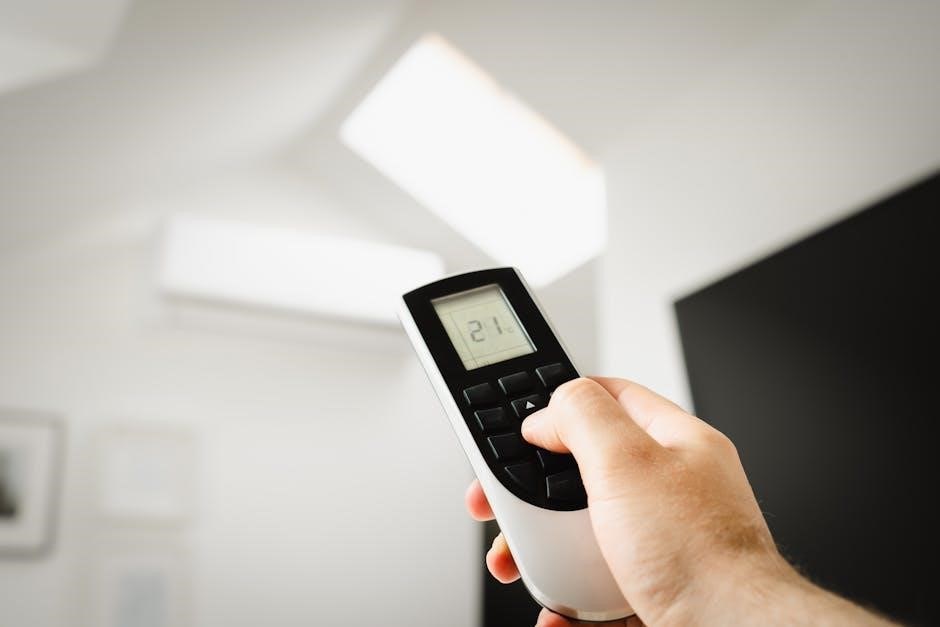
Efficiently manage your home’s climate with Rheem thermostat programming. This feature allows you to create customized schedules tailored to your lifestyle, optimizing comfort and energy savings. Access the programming mode through the thermostat’s menu, typically indicated by a “Program” or “Schedule” button.

You can define different temperature settings for various times of the day and days of the week. For example, lower the temperature while you’re away at work or asleep. Many Rheem thermostats support multiple programs, enabling distinct schedules for weekdays and weekends. Explore the options to create a personalized comfort profile.

Creating Schedules
Establishing a schedule with your Rheem thermostat is straightforward. Begin by selecting the desired program – often labeled as “Weekday” or “Weekend.” Then, input the specific start time and corresponding temperature for each period. Common periods include “Wake,” “Leave,” “Return,” and “Sleep,” but customization is often available.
Navigate through the menu using the thermostat’s buttons to set each period’s time and temperature. Ensure accurate time settings for proper schedule execution. Some models allow copying settings from one day to another, simplifying the process. Review your schedule carefully to confirm it aligns with your daily routines, maximizing both comfort and energy conservation.
Temporary Holds and Overrides
Need a quick temperature adjustment? Rheem thermostats offer temporary holds and overrides. A “Hold” suspends the programmed schedule, maintaining a set temperature for a specified duration – hours or until the next scheduled period. This is ideal for short-term deviations from your routine.
An “Override” allows you to manually set a temperature that remains in effect until the next programmed change. Use this for more extended adjustments. Access these features through the thermostat’s menu, typically labeled “Hold” or “Override.” Remember to cancel the hold or override to resume the programmed schedule; These functions provide convenient control without permanently altering your established settings.
Understanding Thermostat Modes
Rheem thermostats offer various operating modes to optimize comfort and energy savings. “Heat” mode activates the heating system when the temperature falls below the setpoint. “Cool” mode engages the cooling system when the temperature rises above the setpoint. “Auto” mode intelligently switches between heating and cooling to maintain the desired temperature, ideal for fluctuating weather.
“Off” disables the heating and cooling systems. Some models feature an “Emergency Heat” mode, utilizing auxiliary heat sources when the primary system fails. Familiarize yourself with each mode’s function to tailor your thermostat’s operation to your specific needs and preferences, maximizing efficiency and ensuring consistent comfort throughout the year.
Troubleshooting Common Issues
Encountering problems with your Rheem thermostat? A common issue is “No Power,” often caused by a tripped breaker or disconnected wiring – verify the electrical supply. “Incorrect Temperature Readings” can stem from thermostat placement near heat sources or drafts; relocate if necessary. If the thermostat is set too high, check water heater temperature regulation.
Improper wiring can also cause malfunctions; consult the installation guide. For dual element heaters, ensure both thermostats are functioning correctly. Caution: Never attempt electrical repairs yourself; always contact qualified service personnel. A manual reset limit (ECO) may have tripped, requiring a reset.
No Power to Thermostat
If your Rheem thermostat displays no power, begin by checking the circuit breaker supplying power to the water heater and thermostat – a tripped breaker is a frequent cause. Carefully inspect all wiring connections at both the thermostat and the water heater, ensuring they are secure and haven’t become disconnected; Verify the electric supply is active using a voltage tester, if you are comfortable and qualified to do so.
A blown fuse within the water heater’s electrical compartment could also be the culprit. If the issue persists, and you’ve confirmed proper power supply and wiring, it’s crucial to consult a qualified service technician for further diagnosis and repair. Do not attempt repairs yourself!
Incorrect Temperature Readings
If your Rheem thermostat displays an inaccurate temperature, first ensure the thermostat isn’t directly exposed to sunlight, drafts, or other heat sources, as these can influence readings. Verify the thermostat is securely mounted to the wall, preventing air gaps behind the unit. A loose connection or improper wiring can also cause inaccurate displays; carefully inspect all wiring connections at both the thermostat and the water heater.
If the water heater thermostat is set too high, this can affect the overall temperature regulation. If the problem continues, consider recalibrating the thermostat, if your model supports this feature. For safety, always consult a qualified technician if you are unsure about any wiring or calibration procedures.

Resetting Your Rheem Thermostat
Resetting your Rheem thermostat can resolve minor operational glitches and restore factory settings. Begin by powering off the thermostat at the circuit breaker for approximately 30 seconds. This simple step often clears temporary errors. Upon restoring power, the thermostat should initiate a self-test and return to its default configuration.
If a standard reset doesn’t resolve the issue, consult your specific model’s manual for instructions on performing a factory reset. Caution: a factory reset will erase all programmed schedules and settings. For dual element heaters, ensure the manual reset limit (ECO) hasn’t tripped, requiring a manual reset of the high-limit switch. Always prioritize safety and consult a qualified technician if unsure.
Water Heater Temperature Regulation
Rheem water heaters utilize thermostats to maintain desired water temperatures. If the thermostat is set too high, it can lead to scalding risks and energy waste. Refer to the manual’s section on temperature regulation for safe and efficient settings, typically around 120°F (49°C).
Dual element heaters feature two thermostats for precise control and redundancy. Improper wiring or an electric supply issue can disrupt temperature regulation. Always verify the electrical connection and breaker status. Caution: Never attempt to repair electrical components yourself; contact qualified service personnel. A tripped manual reset limit (ECO) can also affect water temperature, requiring a manual reset.
Safety Precautions

Prioritize safety when installing or servicing your Rheem thermostat. Do not attempt repairs to electrical wiring, thermostats, or heating elements yourself. Always disconnect power at the breaker before working with any electrical components. Improper wiring can create a fire hazard or electrical shock risk.
Qualified service personnel should handle all repairs. Be mindful of scalding risks associated with high water temperatures; ensure the thermostat is set to a safe level, typically around 120°F (49°C). If the manual reset limit (ECO) trips, allow the unit to cool before resetting. Always follow local electrical codes and regulations during installation and maintenance.
Dual Element Heater Thermostats
Rheem water heaters utilizing dual heating elements incorporate two thermostats for enhanced temperature control and redundancy. Each thermostat independently regulates one heating element, providing consistent and efficient heating performance. Should one thermostat fail, the other can continue operation, albeit potentially at reduced capacity.
Understanding this dual-thermostat system is crucial for troubleshooting. Issues like insufficient hot water may stem from a malfunctioning thermostat, or potentially a failed heating element. Always consult a qualified technician for diagnosis and repair. Proper function ensures optimal energy usage and prevents potential safety hazards related to overheating or inconsistent water temperatures.
Manual Reset Limit (ECO) Function
The Manual Reset Limit, often referred to as the ECO function, is a critical safety feature integrated into Rheem water heaters. It’s designed to prevent overheating by automatically shutting off power to the heating elements if an unsafe temperature is detected. This is a crucial safeguard against potential damage to the water heater and, more importantly, prevents hazardous situations.
If the ECO function trips, you’ll need to manually reset it. This typically involves accessing a reset button located near the thermostat compartment. Important: Before resetting, identify and address the underlying cause of the overheat – such as improper wiring or a faulty thermostat – to prevent recurrence. Always consult a qualified technician if you are unsure about the reset procedure or the cause of the issue.
Comfort Control2 HD Thermostat Features
The Rheem Comfort Control2 HD thermostat offers advanced features for enhanced home comfort and energy savings. This model boasts serial communication capabilities, allowing for sophisticated system monitoring and control – primarily intended for professional installers. Key features include a user-friendly interface, programmable schedules for customized temperature settings, and remote access via compatible smart home systems.
Furthermore, the Comfort Control2 HD provides detailed system diagnostics, aiding in quick identification of potential issues. The installer guide details the serial communication protocols, enabling integration with building automation systems. It offers precise temperature control, optimizing energy efficiency and ensuring consistent comfort throughout your home. Explore the full potential with its advanced settings!

Serial Communications (For Advanced Users)
The Rheem Comfort Control2 HD thermostat incorporates serial communication features designed for experienced installers and integration with building automation systems. This functionality allows for advanced control and monitoring of the heating and cooling system, extending beyond standard thermostat capabilities. Detailed protocols and command structures are outlined in the accompanying installer guide, enabling seamless communication with external devices.
Understanding these protocols requires technical expertise. Utilizing serial communication enables remote diagnostics, system updates, and customized control strategies. It’s crucial to consult the full documentation before attempting any integration, ensuring compatibility and preventing system errors. Improper configuration can affect system performance; proceed with caution and expertise.
Where to Find Additional Support & Manuals
For comprehensive assistance with your Rheem thermostat, several resources are readily available. The Internet Archive hosts downloadable Rheem RHC-TST213UNMS installation and user manuals in PDF and other formats, offering a valuable archive of documentation. Rheem’s official website provides access to a library of manuals, FAQs, and troubleshooting guides tailored to specific models.
Furthermore, dedicated support teams are available via phone or online chat to address individual concerns and provide expert guidance. The Manual Library and Additional Collections offer supplementary resources. Remember to have your thermostat’s model number handy when seeking support. Utilizing these resources ensures a smooth and efficient experience with your Rheem thermostat.